
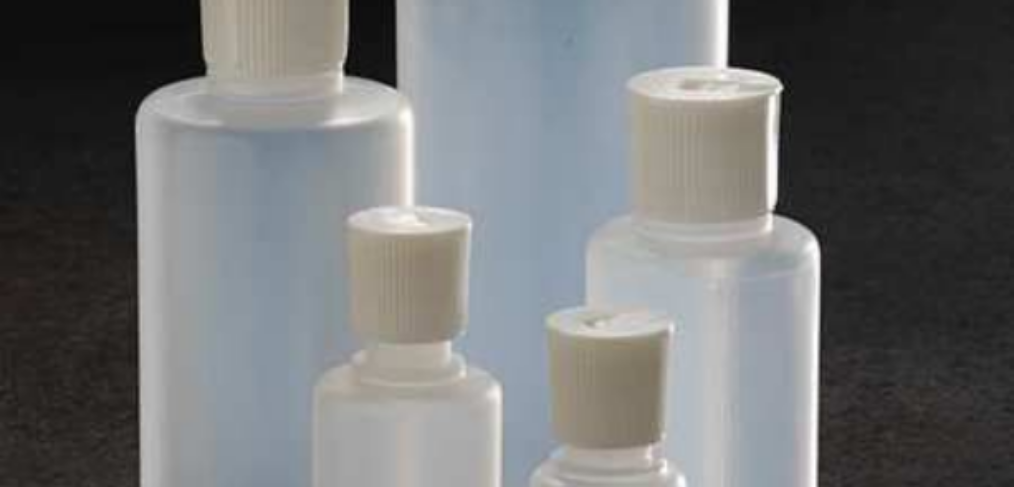
Engineered Closures: The Hidden System That Determines Packaging Performance
Why Closures Are Not Accessories
In rigid plastic packaging, the closure is often underestimated. It is seen as a simple cap rather than a precision-engineered component. In reality, the closure is one of the most technically complex elements in the entire packaging system. A bottle may be perfectly moulded, dimensionally accurate, and visually flawless, but if the closure system fails, the entire package fails.
At t3 Plastic Packaging, closures are engineered as integrated systems. They are designed to work in harmony with neck finishes, materials, filling equipment, and real-world handling conditions. Performance is not defined by appearance, but by how consistently a closure seals, opens, reseals, and protects the product throughout its lifecycle.
Closures directly influence leak prevention, shelf life, consumer confidence, transport safety, and production efficiency. Their design must account for thousands of opening cycles, temperature changes, vibration during transport, and the variability of human use.
The Closure as a Mechanical System
A closure is not a static component. It is a mechanical interface between two moulded parts that must perform repeatedly under controlled and uncontrolled conditions. This interface includes:
- The bottle neck finish
- The closure thread profile
- The sealing surface
- The liner or sealing geometry
- The material behaviour of both components
Each element affects the others. A change in neck diameter, wall stiffness, or material shrinkage can alter how a closure performs. t3 engineers closures as systems, not standalone parts, ensuring predictable interaction between every interface.
Thread Design and Mechanical Tolerance
Thread design is one of the most critical aspects of closure performance. The engagement between closure and neck must be precise enough to seal reliably, yet forgiving enough to accommodate manufacturing tolerances and high-speed application.
Key considerations include:
- Thread pitch and lead angle
- Thread depth and flank geometry
- Engagement length
- Start position and lead-in chamfers
Poorly designed threads lead to cross-threading, inconsistent torque application, uneven sealing pressure, and long-term wear. t3 designs thread systems to distribute load evenly across the sealing surface, ensuring repeatable engagement across millions of cycles.
Micron-level tolerances are maintained to ensure dimensional repeatability across production runs. This consistency is critical for automated capping equipment, where even minor variation can result in misapplied closures or rejected units.
Sealing Systems and Leak Prevention
Sealing does not rely on force alone. It relies on controlled compression between mating surfaces. t3 selects sealing systems based on product type, internal pressure, material behaviour, and expected storage conditions.
Common sealing approaches include:
- Flat land seals for rigid, dimensionally stable containers
- Plug seals for additional internal sealing security
- Compression liners for uneven or flexible sealing surfaces
- Induction-compatible sealing interfaces where required
Each sealing method is tested under real-world conditions, including inversion, vibration, pressure variation, and temperature cycling. This ensures closures maintain integrity during transport, storage, and consumer use.
Torque Control and Consumer Usability
Torque is a balancing act. Excessive torque leads to poor user experience and damaged threads. Insufficient torque compromises sealing integrity and safety. t3 engineers closures to achieve optimal torque values that satisfy both production requirements and consumer expectations.
Torque performance is evaluated across:
- Factory application torque
- Opening torque after storage
- Resealing torque after consumer use
This ensures closures remain easy to open, intuitive to reseal, and consistent across batches. Predictable torque performance reduces customer complaints, product returns, and brand damage.
Compatibility With High-Speed Filling Lines
Closures must perform reliably at speed. On automated filling lines, closures are applied at high volumes where feeding, alignment, and placement must be flawless. t3 designs closures with:
- Stable feeding geometry
- Consistent centre-of-gravity
- Accurate thread starts
- Reliable engagement under rapid application
This reduces line stoppages, misfeeds, and capping errors, improving overall production efficiency and throughput.
Environmental Stress and Long-Term Performance
Closures are exposed to real-world stresses that extend far beyond the factory floor. These include:
- Vibration during transport
- Pressure changes due to altitude or temperature
- Inversion and stacking loads
- Repeated opening and closing by consumers
t3 validates closure performance through extensive testing that simulates these conditions. Long-term durability testing ensures closures do not fatigue, deform, or lose sealing integrity over time.
Why Closure Engineering Protects Brand Reputation
When closures fail, the consequences are immediate and visible. Leaks damage labels, contaminate products, and erode consumer trust. Closure engineering is therefore not a technical detail, but a brand safeguard.
By treating closures as engineered systems rather than accessories, t3 helps brands deliver consistent performance, protect their reputation, and reduce risk across the supply chain.
t3 Plastic Packaging, engineered sealing systems, not just caps.