
Standardisation vs Custom Tooling: Building Scalable Packaging Portfolios
Why Tooling Strategy Matters in Packaging Manufacturing
In rigid plastic packaging, tooling decisions influence far more than the appearance of a container. They affect scalability, production efficiency, long-term manufacturing costs, supply chain flexibility, and the ability to adapt to future market demands.
At t3 Plastic Packaging, tooling strategy is approached as a long-term operational decision rather than a short-term production requirement. Whether a client chooses standardised packaging components or fully custom tooling, the decision must align with growth expectations, production volumes, brand positioning, and manufacturing practicality.
For many businesses, the challenge lies in balancing flexibility with efficiency. Standardised packaging offers speed and cost advantages, while custom tooling creates opportunities for differentiation and unique functionality. Neither approach is universally correct. The most effective solution depends on the broader objectives of the packaging portfolio.
When One Size Does, and Doesn’t, Fit All
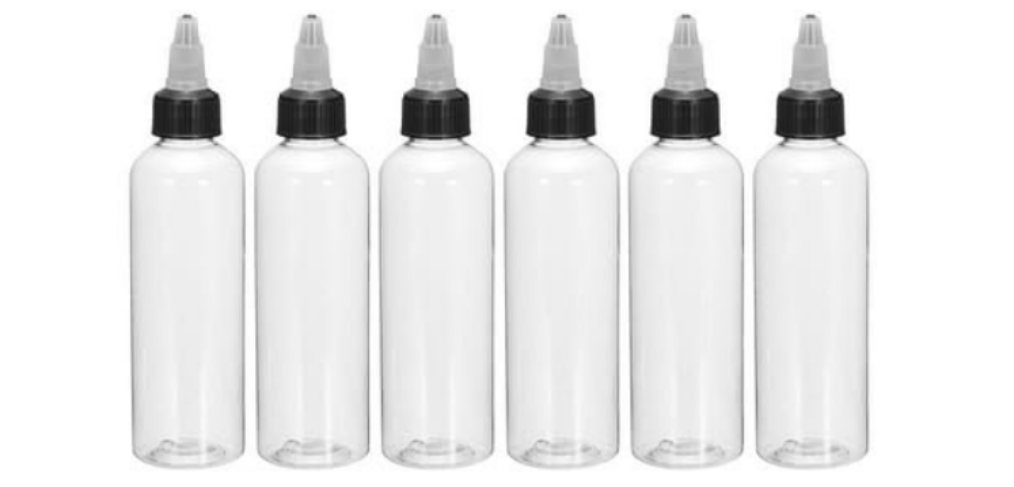
Standardised packaging components are widely used because they simplify manufacturing and reduce complexity. Common bottle neck finishes, standard closure systems, and shared component dimensions allow businesses to scale production efficiently without redesigning entire packaging systems.
Standardisation provides several advantages:
- Faster production setup
- Lower tooling investment
- Easier sourcing of compatible closures
- Simplified inventory management
- Reduced manufacturing risk
For high-volume production environments, these efficiencies can significantly reduce operational costs.
However, standardisation also introduces limitations. Products may lose differentiation on crowded shelves, and certain functional requirements may not be achievable using standard formats. In highly competitive markets, packaging that looks interchangeable can weaken brand recognition.
This is where custom tooling becomes valuable.
What Custom Tooling Actually Delivers
Custom tooling allows packaging to be designed specifically around a product, brand identity, or operational requirement. Instead of adapting the product to fit existing packaging, the packaging is engineered around the product itself.
Custom tooling may involve:
- Unique bottle geometry
- Bespoke neck finishes
- Custom dispensing systems
- Specialised ergonomic features
- Distinctive structural reinforcement
These features help brands create packaging that performs differently and stands out visually.
At t3, custom tooling projects are approached with careful consideration of manufacturability and long-term scalability. A visually unique container is only valuable if it can be produced consistently and efficiently.
Balancing Flexibility with Manufacturing Efficiency
One of the biggest challenges in custom tooling is balancing design freedom with production efficiency.
Highly customised packaging often introduces:
- Longer tooling development timelines
- Increased engineering complexity
- More demanding quality control requirements
- Greater sensitivity to dimensional variation
This does not make custom tooling impractical. It simply means the tooling strategy must account for operational realities from the beginning.
At t3, design decisions are evaluated not only for aesthetics but also for:
- Material flow behaviour
- Cooling efficiency
- Cycle times
- Stackability
- Filling-line compatibility
This ensures custom packaging remains commercially viable throughout production.
The Cost Implications of Tooling Decisions
Tooling investment is one of the most important considerations when developing rigid packaging systems. Standard tooling generally reduces upfront expenditure because existing moulds and compatible components are already available.
Custom tooling, by comparison, requires:
- Dedicated mould design
- Precision machining
- Prototype validation
- Additional engineering development
The upfront investment is therefore higher. However, the long-term value may justify the cost if the packaging delivers improved functionality, stronger brand recognition, or operational advantages.
The real question is not whether custom tooling costs more, but whether it creates measurable long-term value.
Scalability and Portfolio Planning
Packaging portfolios evolve over time. A business may launch with a limited product range but later expand into multiple sizes, formulations, or distribution markets.
Scalable packaging design considers this future growth from the beginning.
Standardised systems often support scalability through shared components. Closures, neck finishes, and production tooling can be reused across multiple product lines, reducing operational complexity.
Custom systems can also scale effectively when designed strategically. Modular tooling concepts, shared neck finishes, and standardised closure interfaces can allow customised packaging to maintain compatibility across product families.
At t3, scalability planning forms part of the tooling decision process to ensure packaging systems remain commercially sustainable as businesses grow.
Operational Performance Beyond Shelf Appearance
Packaging performance extends beyond aesthetics. A container must also function efficiently within manufacturing and logistics environments.
Tooling decisions affect:
- Filling-line speed
- Closure application consistency
- Material usage efficiency
- Stacking stability
- Transport durability
Poor tooling strategy can create operational inefficiencies that increase costs over time.
For this reason, t3 evaluates tooling decisions based not only on visual differentiation but also on real-world production performance.
The Role of Standardisation in Manufacturing Stability
Standardisation provides stability within production systems. Consistent neck finishes, closure compatibility, and tooling geometry simplify manufacturing operations and reduce variability.
This consistency improves:
- Process repeatability
- Quality control reliability
- Inventory planning
- Supply chain management
In high-volume manufacturing environments, stability is often more valuable than excessive customisation.
However, standardisation should not eliminate innovation. The objective is to identify where consistency creates value and where differentiation delivers strategic advantage.
Choosing the Right Tooling Strategy
There is no universal answer to the standardisation versus custom tooling debate. The right strategy depends on:
- Production scale
- Brand positioning
- Budget allocation
- Distribution requirements
- Product differentiation goals
At t3 Plastic Packaging, tooling decisions are guided by long-term performance rather than short-term trends. By balancing operational efficiency with packaging innovation, t3 helps businesses develop scalable packaging systems that remain commercially effective over time.